
Lucky Forge: Idle TD Game
TapNationStrategy
4.272.00 Reviews
- Version
- 1.49.9
- Installs
- 100.00K
- Age Rating
- Everyone
Screenshots
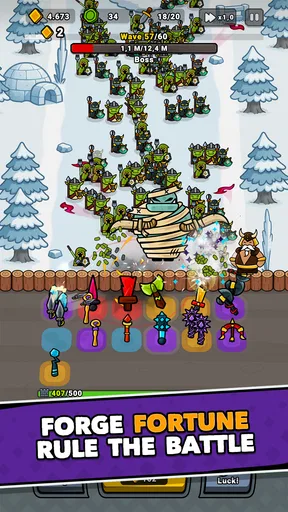

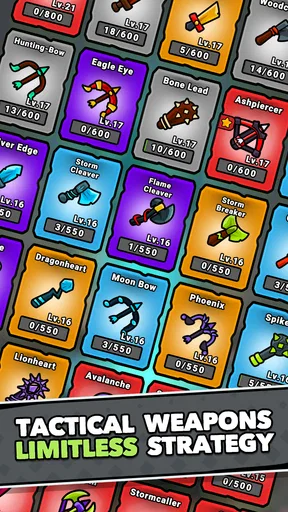
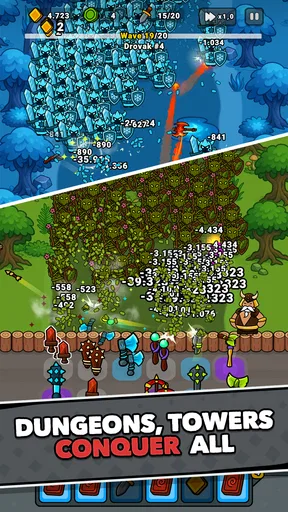

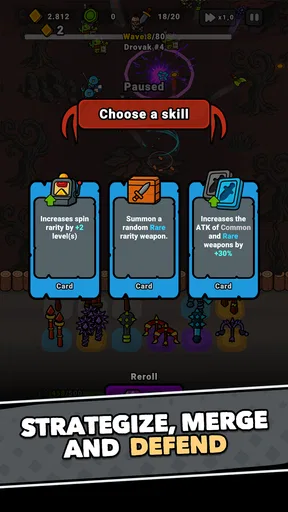
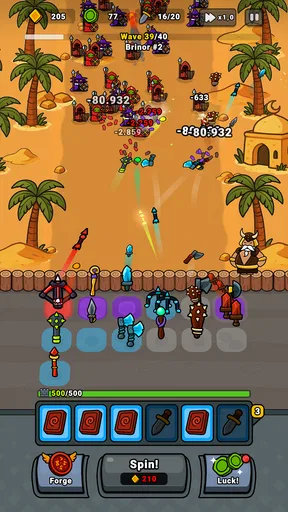

Our Review of Lucky Forge: Idle TD Game
 Analysis by Appyee
Lucky Forge: Idle TD Game caught my attention because it tries to make tower defense feel less like a fixed puzzle and more like a small RPG adventure shaped by chance. I spent time with it as a strategy game from TapNation, and my first impression was that its appeal comes from the tension between planning a defense and accepting that luck can change the shape of a run. That combination gives it a lighter, more immediately approachable mood than a traditional tower defense game built entirely around exact placement.
The basic idea is easy to understand: protect a castle, improve your strength, and make smart decisions while the game introduces an element of uncertainty. It is free to play and suitable for Everyone, which makes it easy to recommend as a casual strategy option for a broad audience. The important distinction is that this is not simply a calm idle game and not simply a conventional lane-defense title. Its identity sits between those two styles, with RPG progression and random outcomes influencing how I approach each session.
That mixture will not suit every player. If you want a perfectly predictable challenge where every defeat can be traced to one precise tactical error, the luck-driven design may feel distracting. If you enjoy adapting to imperfect situations and making the best of the tools you receive, the format has more charm. The strongest reason to try it is the way it turns small defensive choices into a changing routine rather than a single solved pattern.
A bright fantasy mood built around the castle
The setting works because the castle is more than a target to protect. It gives the game a clear emotional center: every improvement feels connected to making the stronghold safer, and every difficult wave creates a simple question about whether my current defense is ready. That focus keeps the experience readable even when several systems are competing for attention.
I also like how the fantasy framing supports the game’s lighter tone. The title suggests forging, luck, and adventure, so the idea of gathering strength for another defense feels natural rather than forced. It is not trying to present itself as a grim war simulation. The mood is closer to a colorful fantasy workshop where preparation, upgrades, and surprise all belong to the same world.
For me, the art direction is most useful when it communicates progress. In a game with repeated defensive encounters, visual change matters because it prevents every attempt from feeling identical. The castle gives the eye a stable reference point, while the RPG layer gives the player a reason to care about what happens between attacks. Even without treating the presentation as a separate attraction, I found that this visual language helps the loop feel more coherent.
There is a practical benefit to that clarity. Casual players can understand the fantasy situation quickly, while strategy fans can focus on the decisions instead of spending time learning an elaborate setting. The trade-off is that players looking for deep narrative world-building may find the castle-and-forge premise more functional than expansive. The world exists mainly to support the defense loop, and I think that is the right expectation to bring to it.
Why the visual language supports short sessions
Lucky Forge is at its best when I treat it as a game for repeated visits rather than one long uninterrupted campaign. The presentation makes it comfortable to check progress, make a decision, and return later without needing to reconstruct a complicated story. That makes it a good match for a commute, a short break, or an evening when I want strategy without the mental commitment of a large role-playing game.
A useful habit is to look at the castle’s condition and the available improvement choices before spending resources impulsively. The fantasy presentation can make upgrades feel rewarding immediately, but the more valuable question is whether an upgrade solves the problem that actually caused a defense to weaken. If the issue is poor timing or an unsuitable combination, simply choosing the most attractive-looking improvement may not help.
This is one of the game’s quieter strengths: the setting encourages an instinctive response, while the strategy layer rewards a slower one. I can enjoy the bright fantasy mood and still pause to ask whether my next decision improves survival, accelerates progress, or merely feels satisfying in the moment.
Sound, pacing, and the feel of a defense
The sound design matters here because tower defense can become repetitive quickly. Repeated attacks, upgrades, and defensive actions need a rhythm that makes another attempt feel inviting instead of exhausting. In my experience, the game’s overall mood is helped when the audio and visual presentation work together: the castle feels like a place being prepared and tested, not just a static background behind numbers.
I would describe the pacing as deliberately accessible. It does not demand the constant attention of a fast action game, but it also avoids making every decision feel meaningless. That middle ground is important for an idle-leaning strategy game. I can watch the defense develop, identify a problem, and decide whether to intervene or improve my setup for the next attempt.
The best way to play is to use the rhythm rather than fight it. I do not try to micromanage every moment. Instead, I check what is happening at meaningful points: after a failed defense, when a new improvement becomes available, or when progress has slowed enough to suggest that my current approach needs changing. This keeps the game from becoming a chore and gives each return visit a clear purpose.
That pacing also explains why the game can work for people who like strategy but do not always have time for a full match. A conventional tower defense game may ask me to remain focused until the final wave, while Lucky Forge is more forgiving as a routine. The cost is that players who want intense, uninterrupted tactical pressure may find the idle influence too relaxed, especially if they prefer every second to demand a direct response.
Using the rhythm instead of chasing every reward
One mistake I made early was treating every available improvement as equally urgent. The game feels generous when it presents new possibilities, but the better approach is to connect each choice to the next defensive problem. If the castle is surviving but progress is slow, an efficiency-minded choice may matter more than a purely defensive one. If a run collapses quickly, strengthening the weak point should come first.
This creates a useful three-step routine. I first identify what ended the previous attempt, then choose an improvement that addresses that weakness, and finally give the new setup enough time to show whether it worked. That last step is easy to skip. Changing several things at once may feel efficient, but it makes it harder to understand which decision actually improved the result.
The sound and pacing make this patient approach feel natural. The game is not constantly shouting for attention, so I can use it as a low-pressure strategy break. Still, I would not call it passive. The idle element gives the loop breathing room, but the player’s judgment remains important when deciding what to improve and when to stop repeating an ineffective plan.
Where luck and strategy meet
The central mechanical question is whether randomness adds variety or simply takes control away from the player. I think Lucky Forge generally works better when luck is treated as a constraint rather than an excuse. I may not receive the exact situation I wanted, but I can still decide how to use what is available and whether to adapt my plan.
That changes the way I evaluate a loss. In a strict tower defense game, I might immediately blame a misplaced unit or a missed timing window. Here, I also consider whether I built a strategy that was too dependent on one favorable outcome. A flexible setup is often more valuable than a theoretically stronger one that only works when the right result appears.
This is the first non-obvious lesson I would give a new player: build for recovery, not just for the best possible roll. If a defense only succeeds when everything arrives in the ideal order, it will feel unreliable. A slightly less ambitious plan that can survive an awkward outcome is often more satisfying because it gives me room to respond.
The RPG structure reinforces that lesson. Progress is not only about winning one encounter; it is about becoming better prepared for the next attempt. That makes failure easier to accept, provided the player can see a meaningful path forward. I like this more than a system where one bad round wipes out all momentum, because it lets a difficult session become information rather than pure frustration.
A practical routine for improving without wasting attempts
When I get stuck, I avoid making random changes to everything at once. I focus on one variable: either the defensive strength, the pace of progression, or the way I respond to an unfavorable result. Then I compare the next attempt with the previous one. This is a simple method, but it is particularly useful in a game where chance can make one result look better or worse than the underlying strategy deserves.
I also recommend saving major decisions for moments when the problem is clear. Spending resources immediately can create a pleasant sense of movement, yet delayed spending gives me more information about what the castle actually needs. This is especially useful for players who are tempted by the RPG side and enjoy upgrading simply because an option is available.
Another trade-off concerns convenience. The idle influence makes progress more approachable, but it can reduce the feeling that every gain came from a perfectly executed plan. Players who enjoy optimizing a defense down to the smallest detail may prefer a more traditional strategy title. Lucky Forge is better for people who want meaningful choices without turning every session into a demanding examination.
Who will enjoy it, and who should choose another style
I would recommend it to someone who likes fantasy presentation, castle defense, gradual progression, and the occasional surprise. It is also a sensible option for a player who wants a strategy game that can fit around a busy day. A realistic use case would be checking the game during a short lunch break, choosing an improvement based on the previous defense, and leaving it to develop until there is time to return and review the result.
I would be more cautious recommending it to a competitive player who wants tightly balanced, fully deterministic encounters. The luck component is part of the appeal, but it also means that not every outcome will feel like a direct measurement of skill. Likewise, someone looking for a story-heavy role-playing game should not expect the castle theme to replace a large narrative campaign.
The free entry point is helpful, though the wider economy deserves attention. Optional purchases range from under a dollar to well over a hundred dollars per item. I would advise setting a personal spending limit before getting invested in the progression loop. The game is easier to enjoy when purchases remain a choice rather than becoming the answer to every difficult defense.
That price range also affects how I compare it with alternatives. Traditional tower defense games may offer more direct control and clearer tactical mastery, while idle RPGs may provide a more automatic progression experience. Lucky Forge occupies the space between them. Its advantage is variety and accessibility; its weakness is that it may not satisfy players who want either extreme in its purest form.
How the overall package holds together
The strongest part of Lucky Forge is its consistency. The castle setting, fantasy presentation, relaxed sound-and-action rhythm, and luck-based strategy all point in the same direction. Nothing feels as though it belongs to a completely different type of game. The result is a defensive RPG that is easy to approach but still gives me reasons to reconsider my habits after a setback.
I also appreciate that the game does not require me to treat every session as a major event. Its structure supports small decisions and gradual improvement, which makes it more welcoming than a demanding tower defense campaign. At the same time, the game is not entirely mindless. The most satisfying progress comes from recognizing why a defense failed and choosing an adjustment with a specific purpose.
There are clear limitations. Randomness can make progress feel less predictable, and the idle influence may soften the tactical pressure that some strategy fans want. The free-to-play structure, including the broad range of optional purchase prices, means disciplined spending is sensible. Players who prefer deep narrative, exact competitive balance, or constant hands-on control may be happier elsewhere.
For everyone else, the game has a pleasant niche. It is a free strategy experience from TapNation with an average rating of 4.2 from around 2.6 thousand ratings, and it has passed 100 thousand installs. Those figures suggest a modest but established audience rather than an unknown experiment. The game is available for devices running Android 7.0 or later, and the current version is 1.49.9.
It was released on May 28, 2025, and its Everyone age rating matches the approachable tone I felt while playing. I would not present it as the deepest tower defense game available, but I would recommend it to friends who enjoy a colorful castle theme, gradual RPG growth, and decisions shaped by luck. My final view is that Lucky Forge succeeds when you accept uncertainty as part of the strategy instead of waiting for it to disappear.
If that sounds appealing, give it a fair trial through several return visits rather than judging it after one defense. Let the rhythm settle, watch which choices actually improve the castle, and resist spending simply to escape a single frustrating result. Lucky Forge: Idle TD Game is most enjoyable when its relaxed atmosphere and unpredictable outcomes are treated as partners to thoughtful play, not substitutes for it.
Verdict
Strengths of Lucky Forge: Idle TD Game
- Simple idle mechanics make it easy to play in short sessions.
- Tower upgrades provide a satisfying sense of steady progression.
- Automatic battles let you earn rewards while away from the game.
- A wide range of towers encourages experimenting with different setups.
- Bright visuals and clear menus make the game accessible to newcomers.
Limitations of Lucky Forge: Idle TD Game
- Progress can feel slow without watching ads or spending resources.
- Enemy variety may become repetitive during longer play sessions.
- Limited strategic depth may disappoint experienced tower-defense players.
- Some rewards and boosts are closely tied to optional advertising.
- Offline earnings may be capped, reducing the benefit of leaving it idle.
Other Releases by TapNation
View All
Thief Puzzle: to pass a level
Puzzle4.6

Guess Their Answer - IQ Games
Trivia4.4

Parking Jam: Car Parking Games
Strategy4.4

Hoop World: Flip Dunk Game 3D
Sports4.7
Similar Picks in This Category
View All
Clash of Clans
Supercell4.5

Plants vs. Zombies™
ELECTRONIC ARTS3.7

Lords Mobile: Kingdom Wars
IGG.COM4.5

Clash Royale
Supercell4.4

State.io — Conquer the World
CASUAL AZUR GAMES4.1

Car Driving School : Car Games
Spark Game Studios3.9
Frequently Asked Questions
What is Lucky Forge: Idle TD Game, and how does its gameplay work?
Lucky Forge: Idle TD Game combines tower defense with idle progression and light forging or upgrade mechanics. You place and improve defensive units, manage your resources, and try to survive increasingly difficult waves of enemies. The idle element allows progress to continue while you are away, although active play is still useful when choosing upgrades, adjusting your defense, and claiming rewards at the right time.
Can I play Lucky Forge: Idle TD Game without an internet connection?
The basic defense and progression systems may be available during offline sessions, but some features can depend on an internet connection. Advertising rewards, cloud synchronization, online events, account services, and certain updates commonly require access to the network. If offline play is important to you, check the current store description and test the game after installation, since connection requirements can change with future updates.
Is Lucky Forge: Idle TD Game free to download, and does it include in-app purchases?
Lucky Forge: Idle TD Game is generally presented as a free-to-download mobile game, but free access does not necessarily mean that every item or reward is available without payment. Idle and tower-defense games often include optional purchases for currency, bundles, faster progression, or removal of advertising. Review the store listing and your device’s purchase settings before playing, especially if children use the device.
Does the game contain advertisements, and are they required for progression?
Players should expect that Lucky Forge: Idle TD Game may use advertising as part of its free-to-play model. Ads can sometimes appear between activities or be offered voluntarily in exchange for extra resources, boosts, or shortened waiting periods. The game can usually be played without accepting every optional advertisement, but watching them may make progression faster. Availability and frequency can vary by region and version.
What devices are compatible with Lucky Forge: Idle TD Game, and is much storage required?
Compatibility depends on the Android or iOS version supported by the current release, as well as your device’s memory and available storage. The initial download may be relatively small, but updates, downloaded resources, cached advertisements, and saved data can increase its footprint. Before installing, compare the requirements shown on the official app store with your device software version and leave extra free space for updates.
Play our best games!


